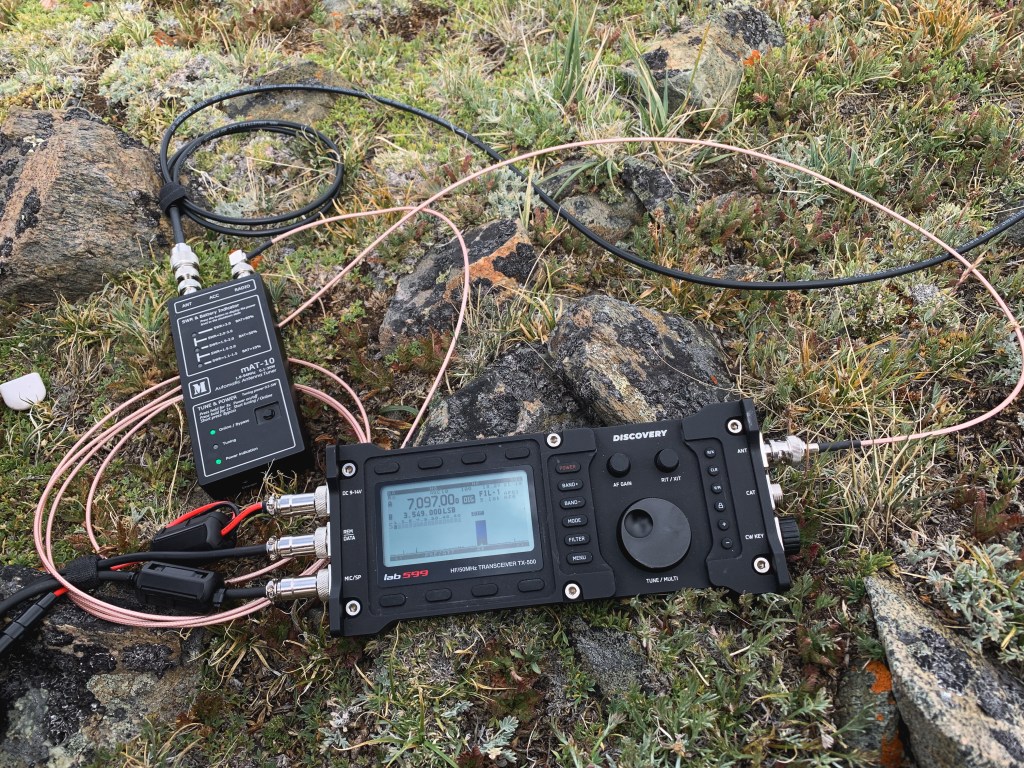
The Lab599 TX-500 is a fascinating radio and a great first entry from the Russian startup company. Hopefully they will be able to continue development of future products and further refine the design. I was an early adopter and have travelled a lot of miles with the TX-500.
On the TX-500 groups.io reflector, the question frequently comes up of what audio settings to use with the rig. As a fully SDR rig, it has a fairly extensive set of options to get the most from your SSB audio. When properly set, performance is excellent and I’ve never failed to make contacts with this rig if using an efficient antenna, even limited to 10 watts.
The first step is to set the MIC gain according to the procedure in the manual. This radio is different from every other ham rig out there in that it has separate indicators for MIC gain and ALC. ALC only engages on the the TX-500 if there is an SWR foldback issue so ignore the ALC meter and use the MIC meter for input level adjustments.
Once the MIC level is properly set, I adjust my filter width, compression, and EQ settings as follows.
EQ RX, LF: 45, MF: 70, HF: 85
EQ TX, LF: 45, MF: 70, HF: 85
TX FIL 1, LF: 350, HF: 2700 (2.35k), CMR: 4
TX FIL 2, LF: 500, HF: 2600 (2.1k), CMR: 3
I generally run the RX filter to match TX FIL 1 above.
I’ve noticed that the TX-500 allows you to set values that are well above the level required to cause clipping or distortion in the DSP signal chain. The best practice with this rig is to never max out any of the settings.
My voice is fairly low pitched and ruddy sounding and the above settings give me good bright punchy audio. My advice is to start use these settings as a starting point with your own voice and make recordings of your transmitted audio using another rig or a Web SDR. Make small adjustments until you are pleased.
The narrow TX filter combined with compression really helps concentrate your talk power to get the most from your 10 watts. As you narrow the filters, however, I’ve found I need to back off the compression to compensate.
Hope that helps!
73,
Padre
 The Orderwire